Queen St. Toronto Street Art: A Mural Journey from Riverside to Parkdale



Queen St. Toronto Street Art: A Mural Journey from Riverside to Parkdale
A soft breeze moves along Queen Street as the light shifts westward. On one end, a red streetcar glides past storefronts in Leslieville, catching reflections from a mural of pollinators dancing through native blooms. On the other, near Lansdowne, a café’s alley crackles with fresh color, graffiti still drying, a spray can rattling in someone’s bag. Queen St. Toronto street art reflects the city’s rhythm: noisy, quiet, layered, and always in motion.
This stretch of city has always expressed itself through visuals. Over the past decade, though, it has evolved into something more deliberate: a continuous open-air gallery shaped by local artists and civic support. Since 2012, the StreetARToronto (StART) program has worked to replace vandalism with vibrant, commissioned works. Artists now use Queen’s walls to hold memory, challenge systems, and celebrate place.
As you travel Queen Street from east to west, the murals unfold like chapters. Grit meets grace. Commentary meets commemoration. And across that visual divide, a shared language begins to emerge. You can trace much of it using the StART Map, a great companion for any Toronto mural tour.
The West End: Graffiti, Grit, and Global Fame
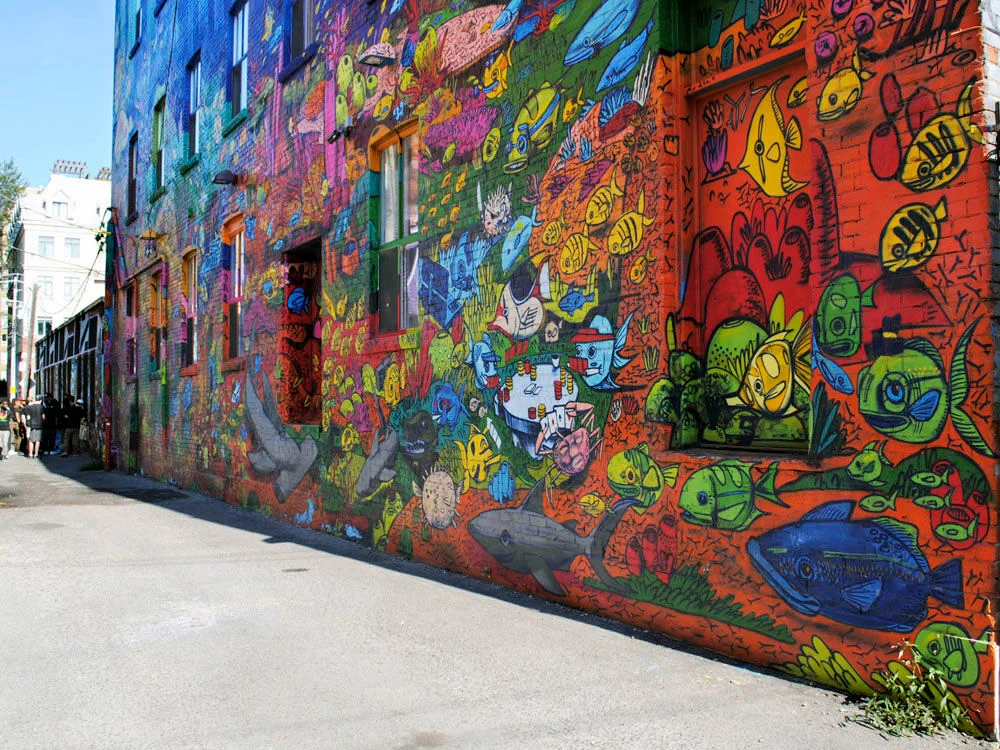
If Queen Street functions as a mural map, Graffiti Alley near Spadina marks its pulse. This narrow stretch, formally known as Rush Lane, became an official graffiti zone in 2011. Since then, it has grown into one of the most iconic pieces of Graffiti Alley Toronto. Artists don’t simply show their work here. They rewrite it, remix it, and respond to each other in real time. One wall might feature bold political slogans like Land Back or Black Lives Matter. Another, a surreal collage of penguins and pink clouds.
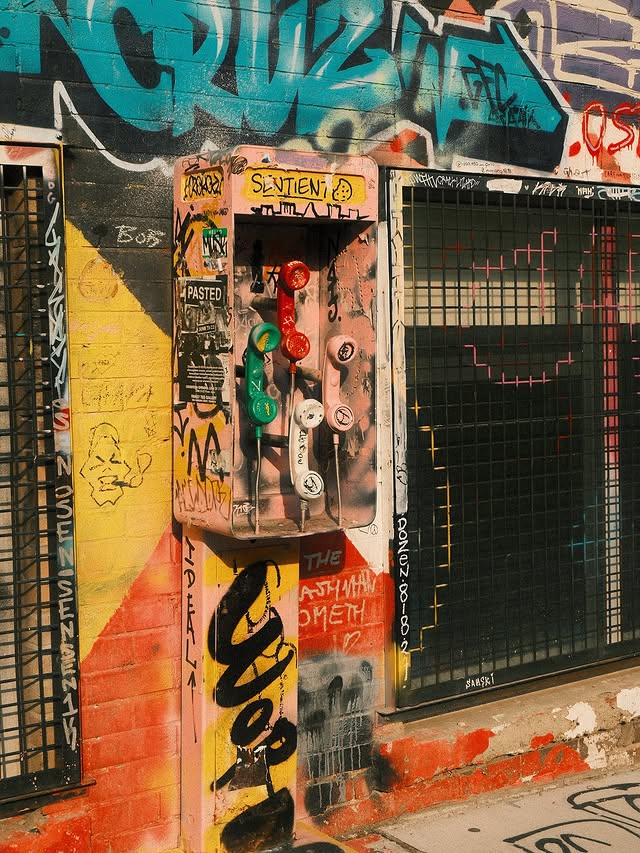
Artists like Uber5000, with his wry takes on Toronto identity, and ELICSER Elliot, who paints dreamlike, emotionally layered figures, treat this space as a revolving canvas. They return often, not to preserve, but to evolve. Their murals pulse with energy, voice, and the willingness to be reimagined.
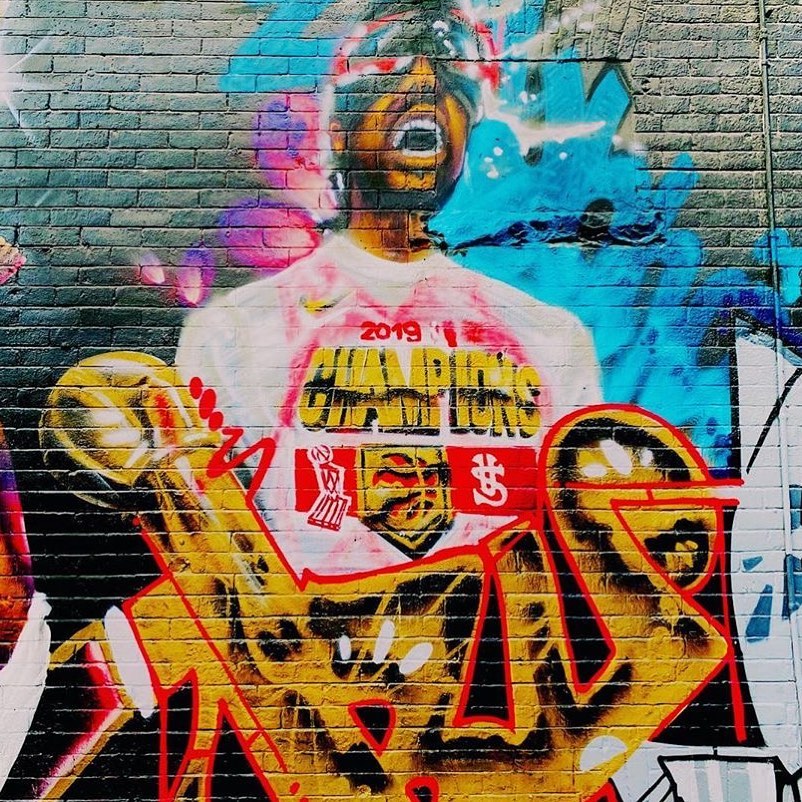
Further west, the murals spread out. Inside the West Queen West BIA, officially recognized as the Art + Design District, Queen’s walls reflect decades of creative energy. At the Cameron House, the “This Is Paradise” mural holds its ground, half statement and half invitation. In nearby Parkdale, the Women Paint TO collective has filled hidden laneways with feminist themes and powerful visuals. Near Lansdowne, Chief Lady Bird’s portrait of an Indigenous mother watches over the street, surrounded by soft florals and visual strength.
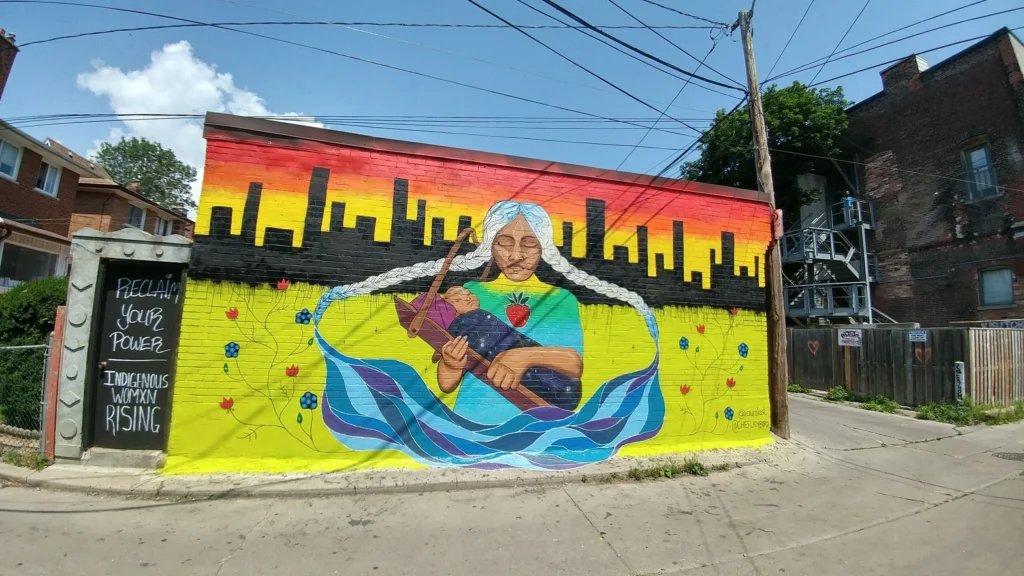
If you explore Parkdale street art, you’ll notice a shift that’s bolder, more political, and deeply tied to community expression. Out here, street art doesn’t just decorate. It declares.
The East End: Heritage, Water, and Community
As soon as you cross the Don River, Queen’s energy quiets. Buildings step back. Murals stretch out. Artists here lean into history and place.
At the Queen Street Viaduct, Eldon Garnet’s permanent piece reads: “The River I step in is not the River I stand in.” The line, carved into steel above the bridge, reflects time, change, and the slow movement of a city built on water. Garnet’s work anchors the east side with thoughtfulness and scale.
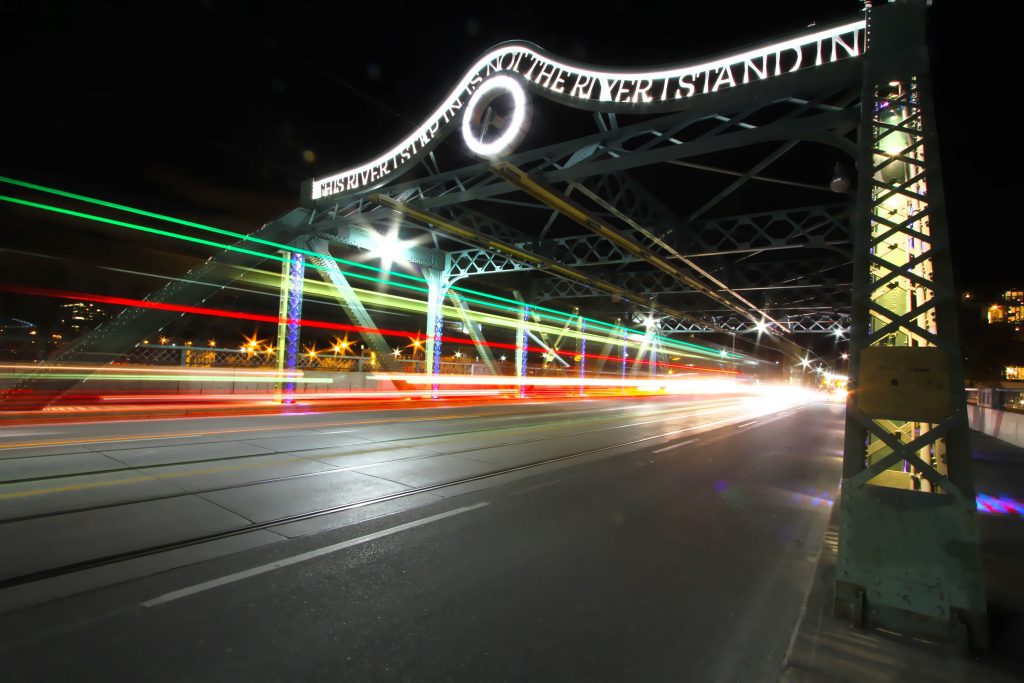
From the viaduct into Riverside, murals continue to tell local stories. The Sports Heritage & Legacy Mural honors the neighborhood’s roots in curling and baseball at Sunlight Park. Just blocks away, Indigenous artists Chief Lady Bird and Isaac Odinimaad created the striking “Tkaranto Past / Tkaranto Future” mural, which reclaims Queen Street as a traditional gathering place. Their symbols connect past and future through vibrant color and deep meaning.
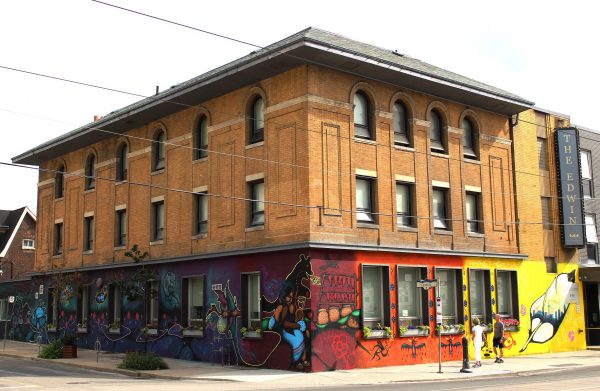
Riverside also leans into ecology. Nick Sweetman’s Along the Riverbanks mural, stretching 2,000 square feet, depicts native plants, pollinators, and the Don River’s ecosystem. The artwork draws from biology and urban renewal, asking viewers to see the river not just as infrastructure but as habitat.
In Leslieville, community memory comes into sharper focus. At Queen and Jones, ELICSER painted the Leslieville Mural, a lone figure dreaming beneath a maple tree, imagined as a modern-day “Leslievillian.” The mural replaces an older historical piece, gently shifting the neighborhood’s lens from colonial past to present-day intimacy. Its caption invites passersby to “put down your phone and daydream under a Maple Tree.”
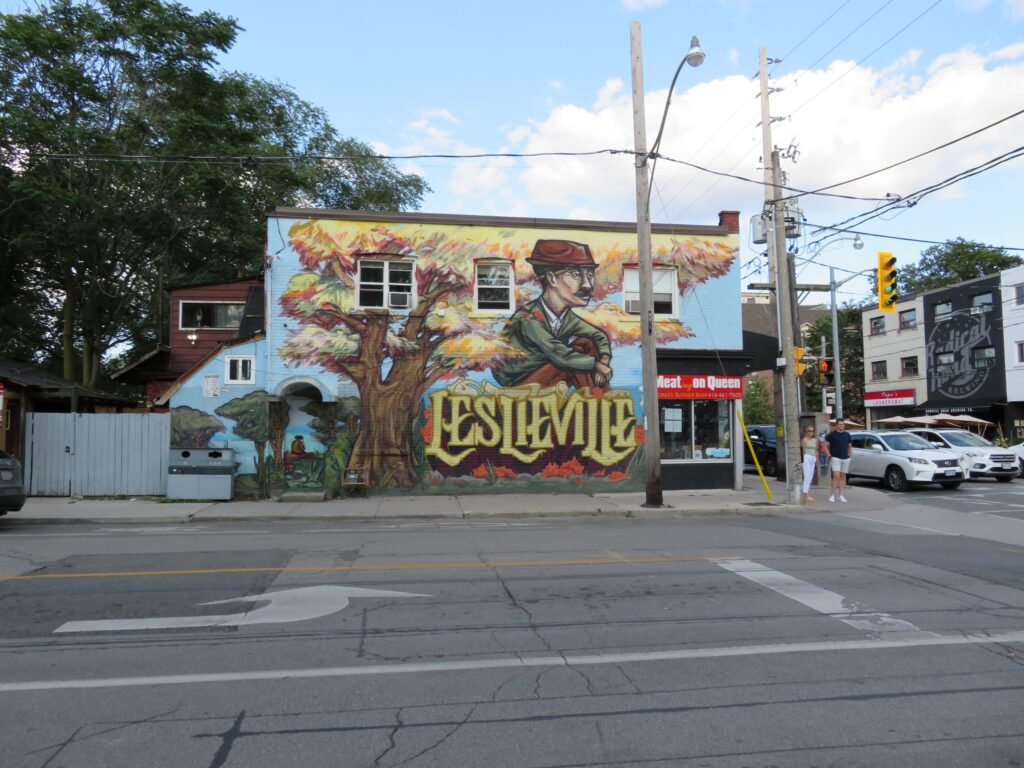
If you’re exploring Leslieville murals, you’ll find this corner especially grounded with art that doesn’t rush, but lingers.
The Unifiers: Bridging the Divide
Despite their contrasts, the east and west ends of Queen Street remain connected by artists who move between them. ELICSER Elliot bridges conversations. His work appears prominently on both ends of Queen and helps tie together a city that often feels segmented.
Programs like StART make this continuity possible. By funding artists and inviting neighborhood BIAs like Riverside and Queen West into the process, the city actively builds a unified visual identity across Queen. These murals don’t just appear. They result from partnerships, planning, and a shared belief in public space.
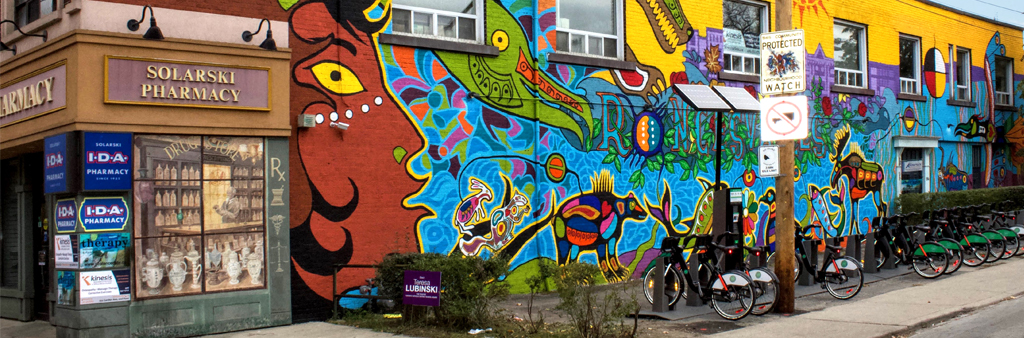
Across the entire corridor, Indigenous artists, local collectives, and solo visionaries keep returning to similar themes: water, memory, community, resistance. The work feels distinct but aligned. Toronto street art might vary by block, but its presence remains consistent.
Walk the Gallery Yourself
You don’t need a ticket or a tour guide. The gallery lives on sidewalks, alleyways, and bridge underpasses. You can walk from Riverside to Parkdale or hop on the 501 streetcar and let the city’s walls roll by.
Use the StART Map to plan your own Toronto mural tour or let curiosity guide you. Pause at a laneway entrance. Double back when a mural catches your attention. Watch how murals fade, evolve, and occasionally disappear altogether.
Queen Street doesn’t hang its art in frames. It lets it breathe, weather, and speak. And it invites you, casually and consistently, to pay attention.