Vancouver Public Art Guide: Top Sculptures, Murals & Landmarks
Vancouver’s public art is woven into the city’s daily rhythm sculptures rising at the shoreline, murals brightening side streets, and installations that anchor neighbourhoods with personality and play. From Gastown’s historic corridors to the open stretches along English Bay, the city’s artworks tell a story of creativity shaped by landscape, culture, and community. Each piece offers a moment of pause, a shift in perspective, or simply a reason to look up.
This guide highlights the artworks that define Vancouver’s streets, tracing a path from iconic landmarks to quieter neighbourhood gems.
Gastown Steam Clock
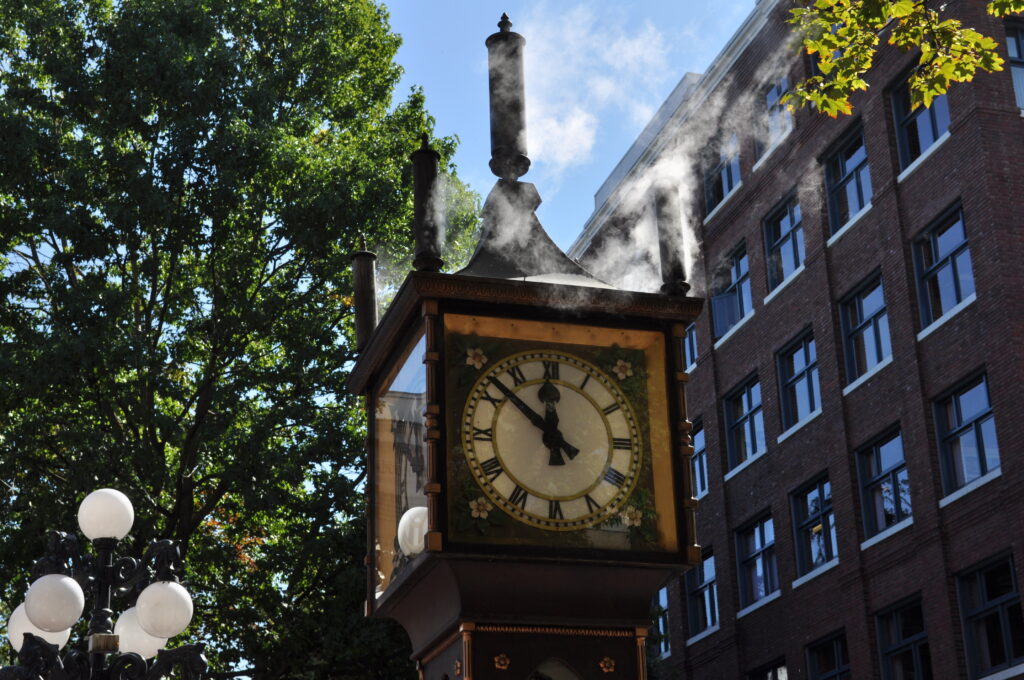
The Gastown Steam Clock is one of Vancouver’s most recognizable landmarks a whimsical piece of urban engineering that blends vintage charm with modern craftsmanship. Built in 1977 by Canadian horologist Raymond Saunders, the clock was designed to showcase the neighbourhood’s historic steam-heating system, channelling low-pressure steam to power its whistles and visible puffs that mark the hour.
Set at the corner of Water and Cambie Streets, the clock features four faces, Westminster chimes, and a glass case that reveals its inner mechanisms, making it as much a small-scale spectacle as it is a timepiece. Though now assisted by electric power for accuracy, it still uses steam to animate its signature whistles and hourly plume.
A favourite stop for visitors wandering historic Gastown, the Steam Clock adds a sense of character and storytelling to the cobblestone streets part public art, part engineering curiosity, and a playful reminder of the city’s past.
The Drop
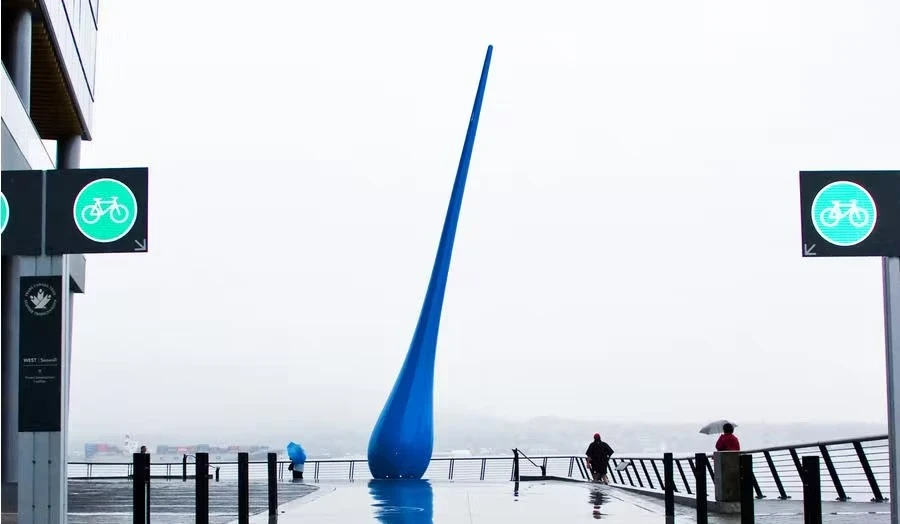
The Drop is a striking 20-metre blue sculpture positioned along the waterfront at Bon Voyage Plaza in Coal Harbour. Created by the German artist collective Inges Idee, the piece rises like a single oversized raindrop captured just before it touches down an understated nod to Vancouver’s coastal climate and its relationship with the surrounding water. Installed in 2009 as part of the Vancouver Convention Centre Art Project, it adds a playful, contemporary landmark to the shoreline, contrasting against the harbour, mountains, and the industrial yellows across the inlet. Today, it remains one of downtown Vancouver’s most recognizable and photographed pieces of public art.
Digital Orca
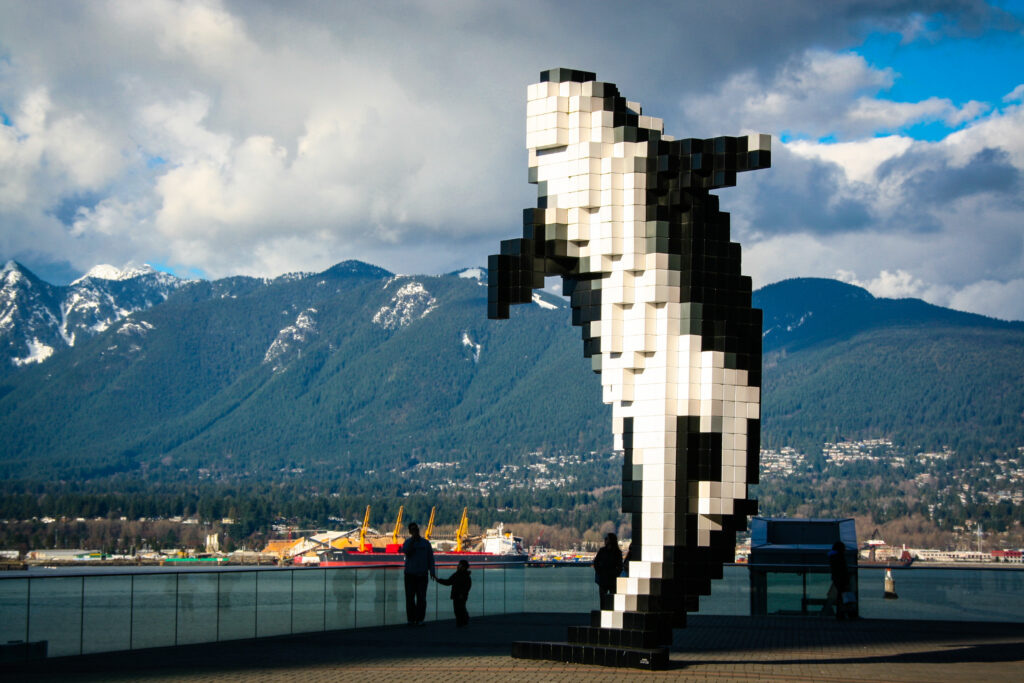
On the edge of Vancouver’s Jack Poole Plaza, adjacent to the Vancouver Convention Centre and framed by a sweeping view of Coal Harbour, a whale breaches—not in fluid arcs of muscle and skin, but as a towering sculpture built of cubic pixels. This is Digital Orca, a work by renowned Canadian artist and author Douglas Coupland, unveiled in 2009 as a public art commission for the City of Vancouver.
Coupland’s sculpture renders a killer whale, a familiar and sacred symbol of the Pacific Northwest, not in naturalistic curves, but in stark black and white cubes. It appears as though plucked from a digital simulation or 1980s video game and dropped, mid-leap, into the heart of a modern city. Constructed from powder-coated aluminum and supported by a stainless steel armature, the orca’s form feels frozen in motion. From a distance, it reads as sleek and solid; up close, it becomes a pointillist explosion of geometry.
Digital Orca isn’t simply a stylized tribute to marine life, it’s a deliberate collision of worlds: nature and code, biology and bitmap. For Coupland, the orca functions as a “bridge between the past and the future,” linking the maritime legacy of Vancouver’s working harbour to the city’s evolving digital economy. At night, embedded LEDs flicker subtly across its structure, evoking both marine bioluminescence and the constant hum of circuitry, a quiet nod to the modern workplace inside the adjacent convention centre.
The sculpture is also a prime example of Coupland’s larger body of work, which interrogates the effects of technology, globalization, and modern identity. Born in 1961 in West Germany and raised in West Vancouver, Douglas Coupland achieved international fame as the author of Generation X: Tales for an Accelerated Culture (1991), a novel that gave voice to the disaffection and ambivalence of a generation caught between analog upbringing and digital adulthood. Over the decades, he has written more than a dozen novels, along with works of non-fiction, television scripts, and visual art.
Since returning to visual practice in the early 2000s, Coupland has become one of Canada’s most prominent contemporary artists. His public art includes pieces such as Golden Tree, a monumental, gold-painted cast of the iconic Stanley Park Hollow Tree, and Infinite Tires, a spiraling tower made entirely of stacked automotive tires. Like Digital Orca, these works are playful but pointed, blending pop aesthetics with social commentary.
Digital Orca’s location is just as meaningful as its form. Facing the harbor, it is a literal and symbolic interface between land and sea, technology and tradition. The orca is a powerful creature in the mythology of the Coast Salish peoples, long viewed as an emblem of strength, protection, and kinship. By reimagining it in digital form, Coupland neither diminishes its symbolism nor makes it cartoonish—instead, he updates the visual vocabulary, creating space for reflection in a city where glass towers and data streams increasingly define the horizon.
The sculpture has become a beloved icon of downtown Vancouver. Tourists pose with it. Children play beneath its overhang. Locals pass it daily, sometimes pausing to admire its uncanny stillness. And though it seems solid, even monolithic, Digital Orca is also a temporal object—one whose meaning continues to evolve alongside the very technologies that inspired it.
In a city grappling with the push-pull of progress and preservation, Coupland’s pixelated whale makes a quiet yet profound statement: that even in a digitized world, the symbols that root us to place and memory can still rise, majestic, from the sea.
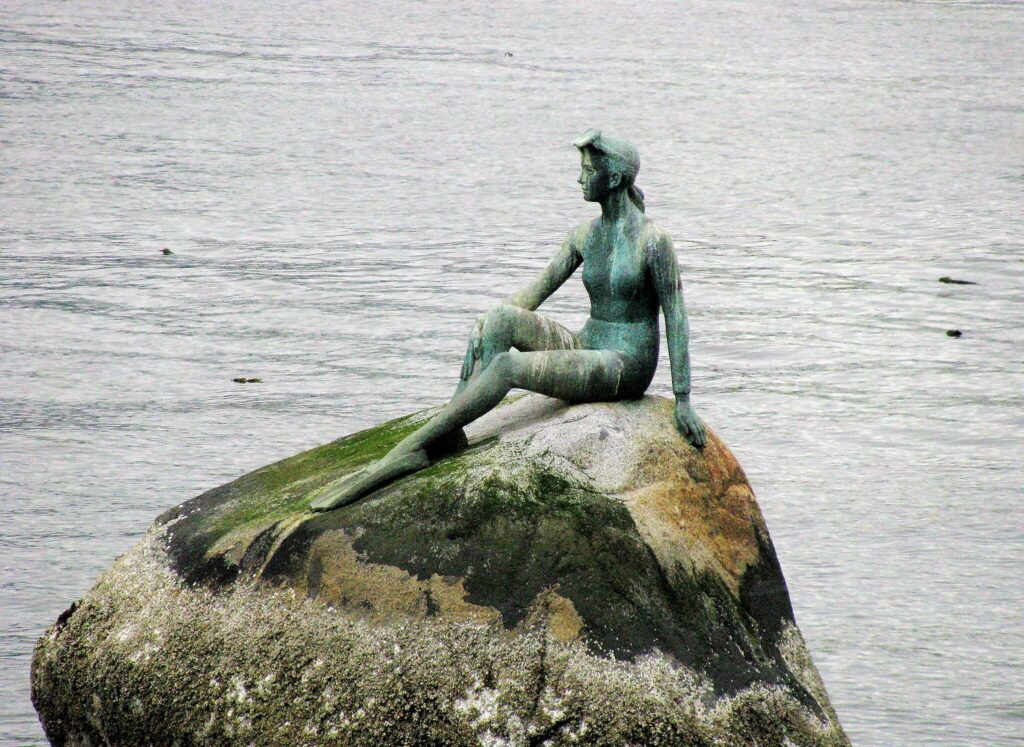
Girl in a Wetsuit
Girl in a Wetsuit is a life-size bronze sculpture created in 1972 by artist Elek Imredy and set along the rocky shoreline of Stanley Park in Vancouver. Inspired by the growing scuba-diving culture of the era, the piece depicts Imredy’s friend Debra Harrington seated in a wetsuit with flippers and a mask resting on her forehead. While often compared to Copenhagen’s Little Mermaid, the work was conceived as a distinctly local symbol reflecting Vancouver’s connection to the water and its outdoor culture. Quietly positioned just offshore, the sculpture has become a beloved landmark, blending art, landscape, and the rhythms of the surrounding inlet.
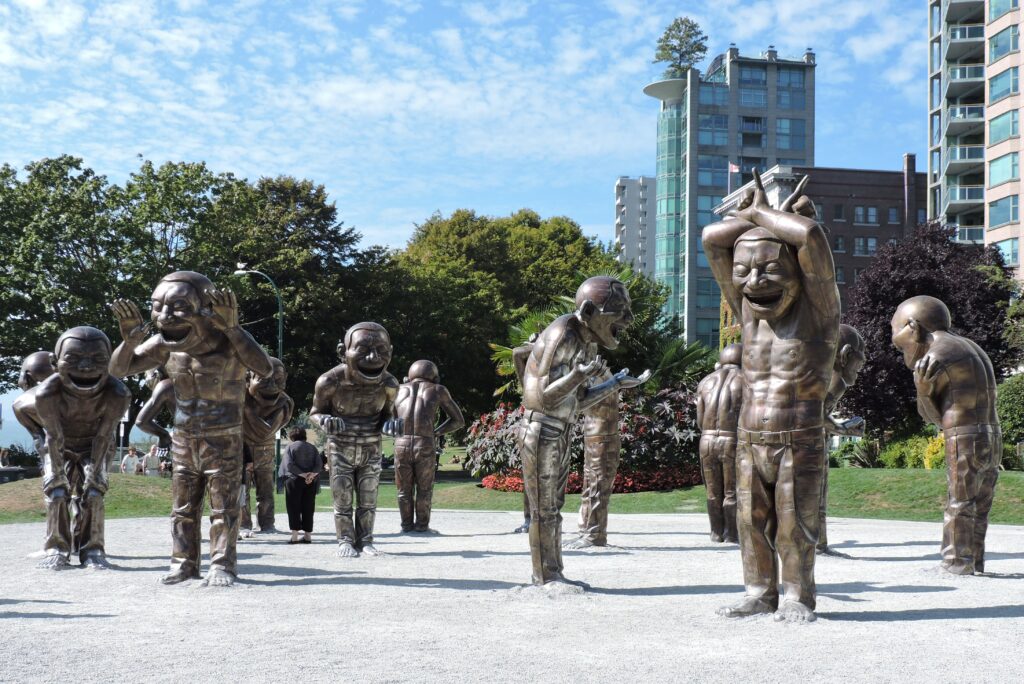
A-maze-ing Laughter
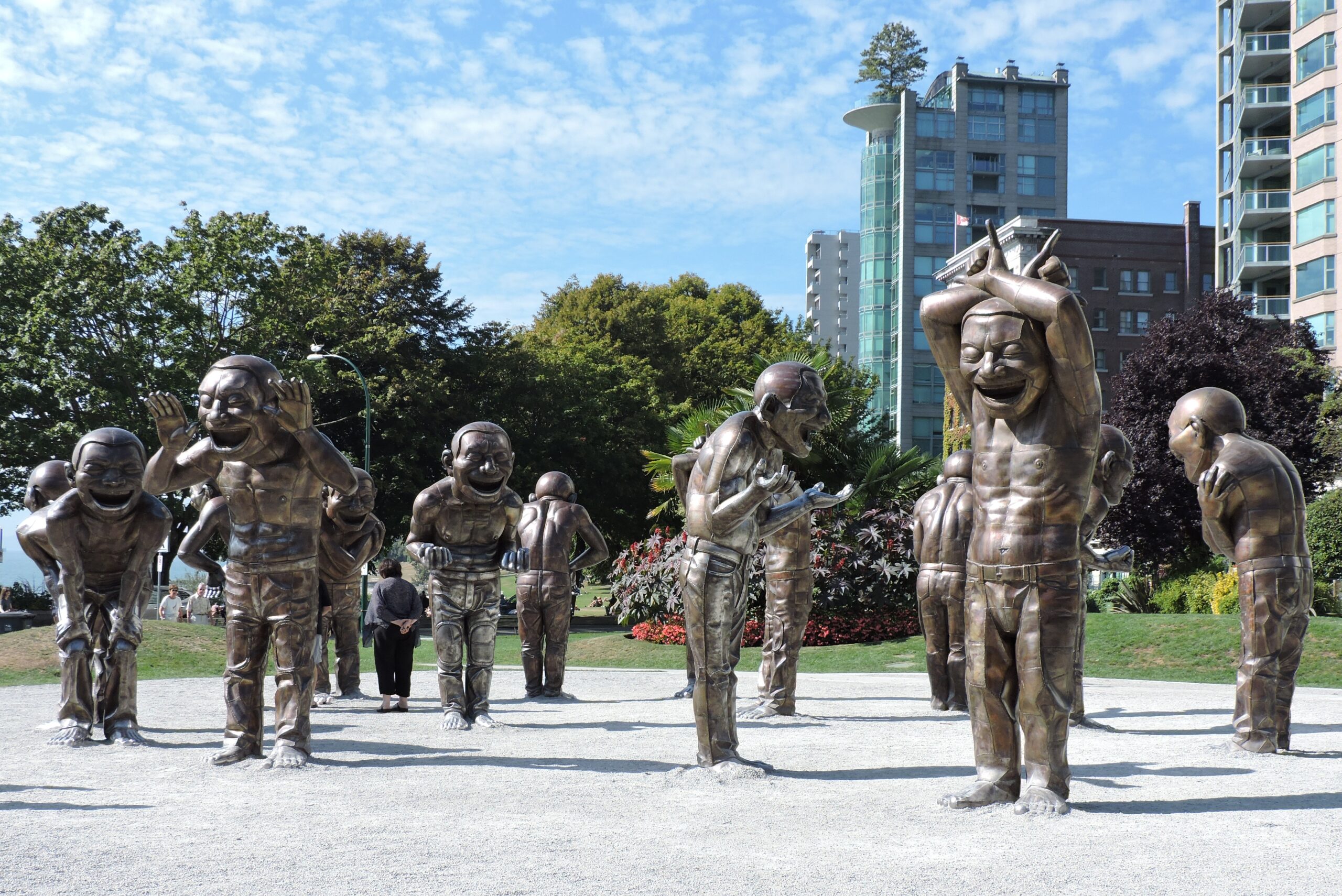
A-maze-ing Laughter is an iconic public art installation in Vancouver’s West End, set just steps from English Bay at Morton Park. Created by Chinese artist Yue Minjun, the work features fourteen larger-than-life bronze figures each roughly three metres tall captured in a moment of exaggerated, joyful laughter. The repeating expressions and playful scale invite visitors to walk among the sculptures, interact with them, and experience the piece from multiple angles.
Originally part of the Vancouver International Sculpture Biennale, the installation has since become a beloved landmark, known for its lighthearted energy and its ability to draw people together. An inscription at the site captures its spirit well: “May this sculpture inspire laughter, playfulness and joy in all who experience it.”
Now a permanent fixture gifted to the city, A-maze-ing Laughter remains one of Vancouver’s most photographed public artworks an open-air reminder of how art can transform everyday spaces into moments of delight.
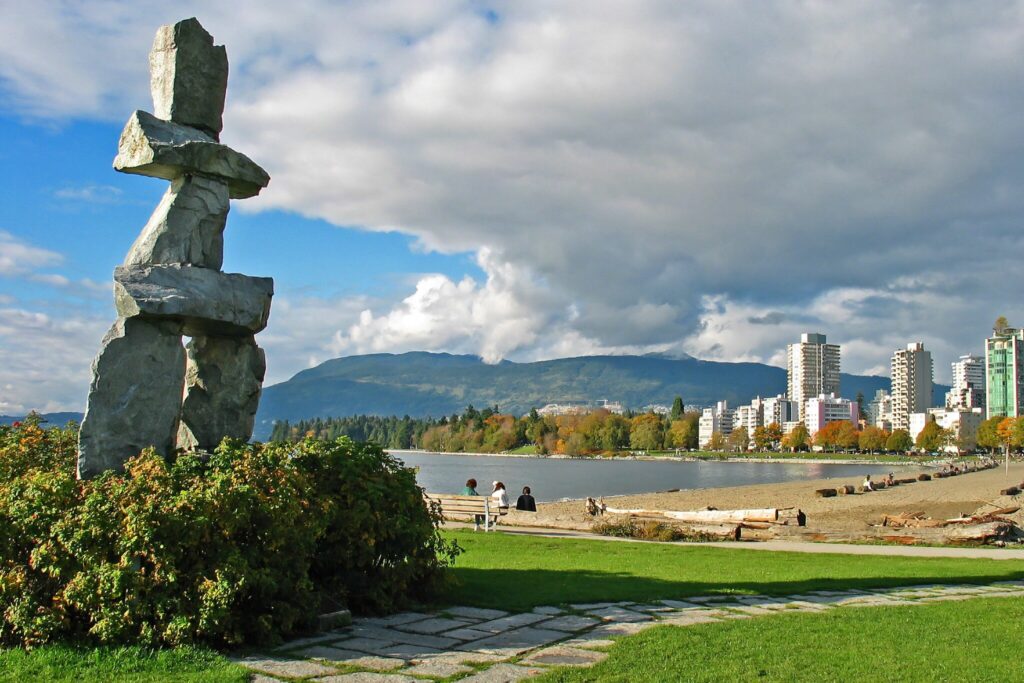
Inukshuk
The Inukshuk at English Bay is one of Vancouver’s most recognized coastal landmarks an iconic stone sculpture created by artist Alvin Kanak. Originally commissioned by the Government of the Northwest Territories for its pavilion at Expo ’86, the piece was later gifted to the City of Vancouver and relocated to its present waterfront setting in 1987. Standing six metres tall and constructed from grey granite, the Inukshuk reflects the Inuit tradition of using stone markers for navigation, community guidance, and expressions of hospitality. Today, it serves not only as a cultural symbol but also as a welcoming beacon for residents and visitors along the shoreline.
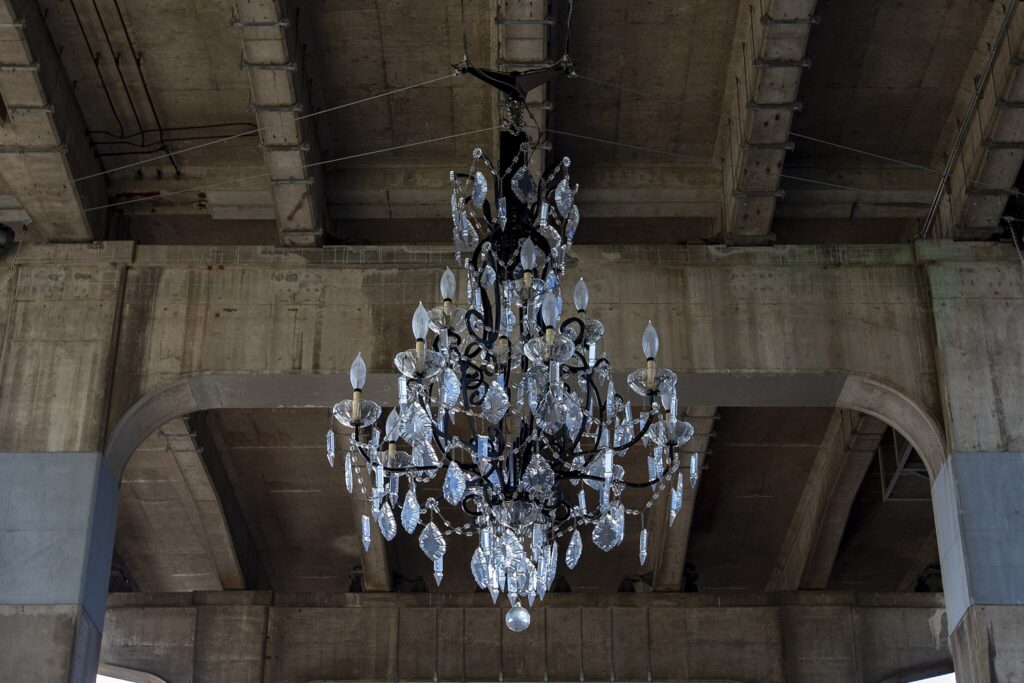
Spinning Chandelier
Spinning Chandelier is one of Vancouver’s most dramatic public artworks a shimmering, oversized chandelier suspended beneath the Granville Street Bridge at Beach Avenue. Designed by artist Rodney Graham and unveiled in 2019, the piece transforms an underused urban space into a moment of spectacle. Crafted from stainless steel, LED lights, and 600 polyurethane crystals, the chandelier measures over seven metres tall and comes to life three times a day, lowering, lighting up, and rotating in a slow, theatrical cycle before rising back into place.
Commissioned as part of the Vancouver House development, the work plays with contrast: an 18th-century–style chandelier placed beneath concrete infrastructure, elegance set against the city’s daily rush. The installation has sparked lively conversation admired for its boldness and engineering, questioned for its scale and cost but it remains an undeniably captivating landmark. Whether seen during its programmed descent or glowing above the street, Spinning Chandelier reshapes the space beneath the bridge into an unexpected stage.
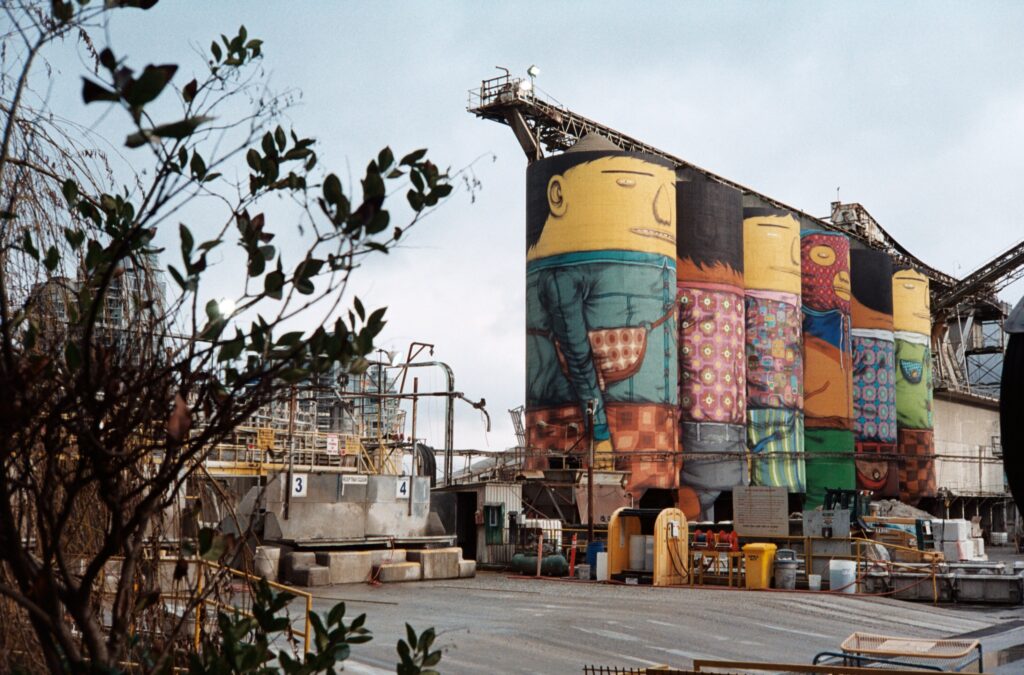
Giants
The Giants murals on Granville Island transform six towering concrete silos into one of Vancouver’s most joyful and recognizable public artworks. Created in 2014 by renowned Brazilian artists OSGEMEOS, the 70-foot-tall figures wrap around the Ocean Concrete plant, bringing colour, character, and a larger-than-life presence to the False Creek shoreline. Half of the figures face the water, meeting boaters and kayakers with bright expressions; the others look inward toward the island, adding a playful backdrop to its studios, markets, and pathways.
Commissioned by the Vancouver Biennale, Giants was conceived as a way to give depth and scale to the artists’ signature mural style. The project became the largest of their career at the time, using thousands of spray-paint cans and reshaping an industrial site into a beloved landmark. While the future of the murals has been a subject of discussion due to ongoing maintenance costs, their impact on Vancouver’s skyline—and on Granville Island’s creative identity—remains undeniable.
Vivid, monumental, and full of personality, Giants stands as one of the city’s most photographed public artworks and an enduring symbol of how art can animate even the most unexpected spaces.
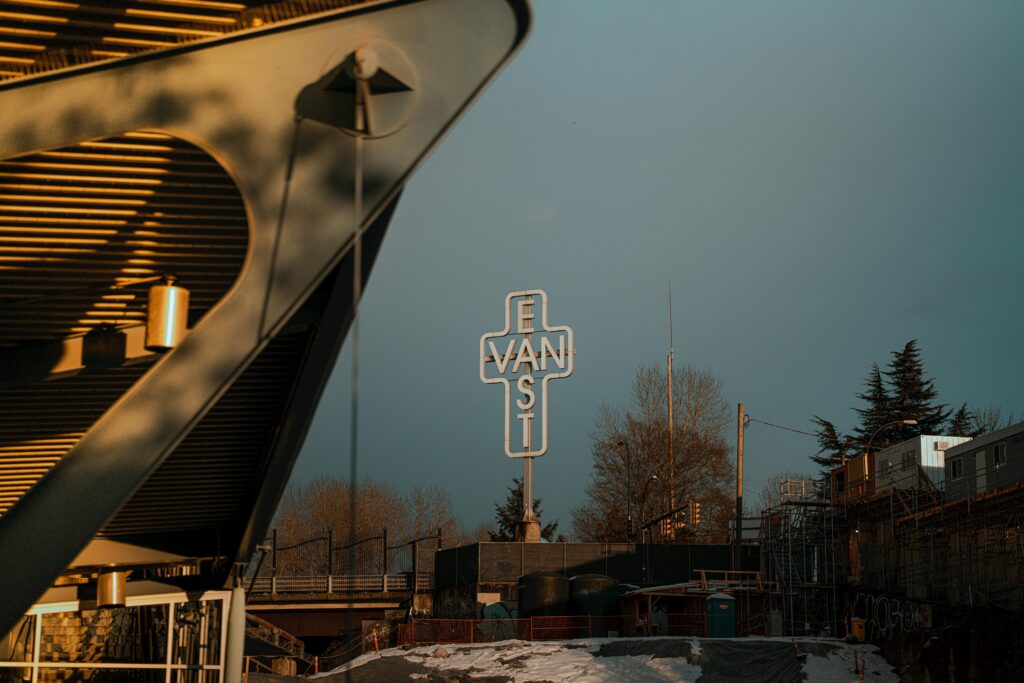
East Van Cross
The East Van Cross is a long-standing cultural symbol of Vancouver’s east side, formed by the intersecting words “East” and “Van” to create a cross-shaped mark of identity, resilience, and local pride. Originating as graffiti that expressed the grit and marginality of East Vancouver, the emblem has since become a recognized city icon. Its most visible expression is Monument for East Vancouver, Ken Lum’s illuminated 2010 sculpture near Clark Drive and East 6th Avenue, which transformed the symbol from street writing into public art. Today, the East Van Cross appears across the city’s visual culture from apparel and jewellery to local branding continuing to reflect the neighbourhood’s history, character, and community spirit.