What Makes a Neighborhood Feel Livable?
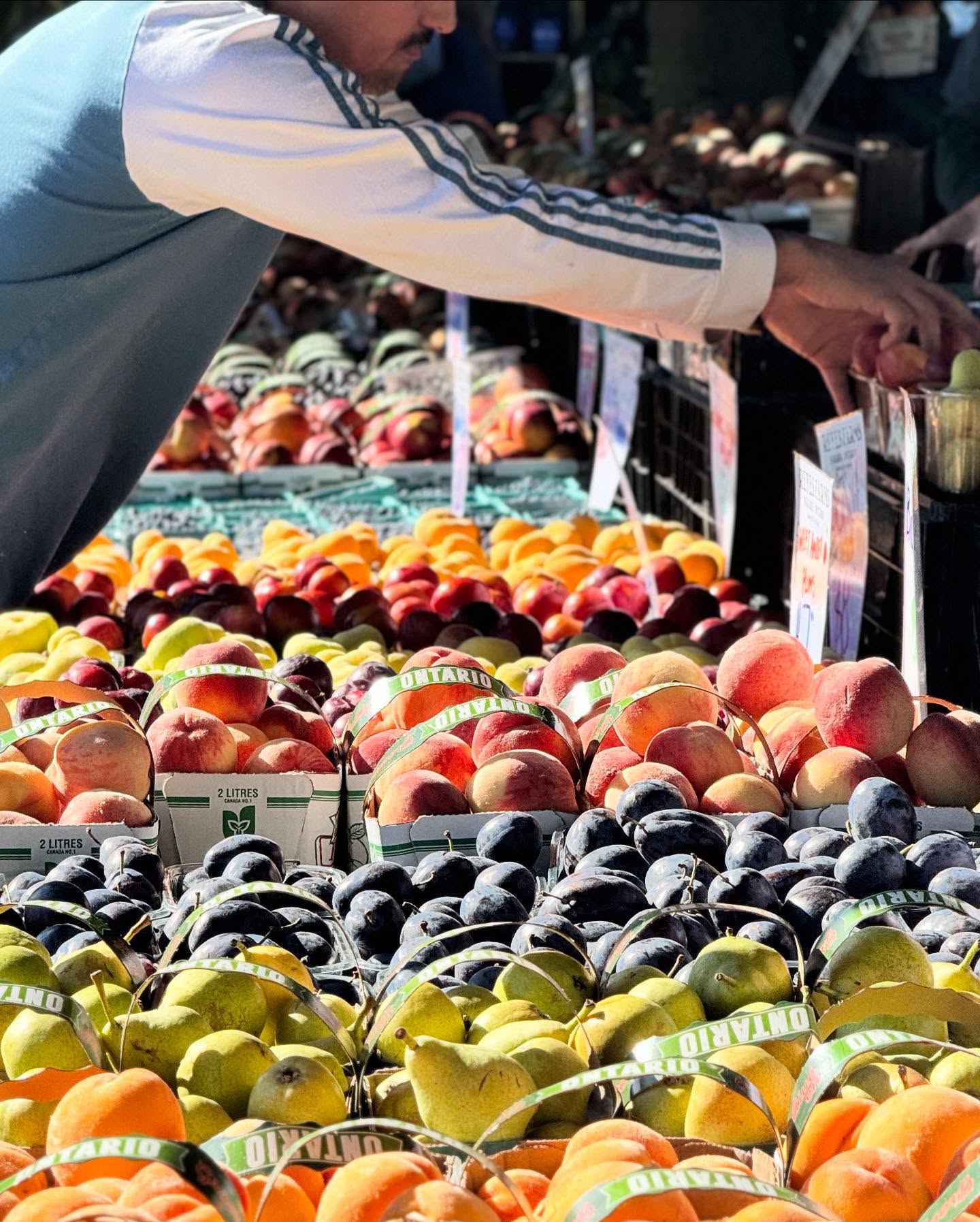
Often, it comes down to what’s nearby. Not just in theory, but in practice. Groceries sit within walking distance. You pick up bread after work. Shared routines pull people out of their apartments. In Toronto, farmers’ markets fill that role across a range of neighborhoods. They’re not dramatic, but they reveal a lot. Where a weekly market pops up, and how people use it, speaks volumes about the area’s function.
Farmers Markets That Shape the Neighborhood
Grocery access shapes how people choose where to live. Not just any groceries, but ones that fit into daily routines. In Toronto, that might mean a quick weekday stop or a standing Saturday habit. Markets set up beside fieldhouses, parks, or under viaducts. These aren’t showpieces; they play an active part in the week.
Markets signal neighborhood dynamics. Places with active farmers’ markets usually offer walkability, consistent foot traffic, and civic engagement. You see it in Leslieville, East York, and Sorauren, in the people shopping and in how markets thread into local rhythms. These markets thrive in neighborhoods where people already live at street level.
They also reflect local adaptation. Some grew through civic support. Others emerged from grassroots energy. Their success depends less on prestige and more on how well they sync with the week’s flow.
The Everyday Scale of a City
Toronto builds fast and high, but livability relies on smaller-scale infrastructure. Farmers’ markets operate at that scale. They take shape in parks, parking lots, and community centers. Markets don’t need much space, but they benefit from regularity. When they thrive, it’s because neighbors let them fade into the background and become part of the routine.
You’ll rarely find design polish at these markets. They’re mostly practical: card tables, folding signs, vendors who know your name. While many run seasonally, some push into late fall or move indoors. Markets stay flexible and respond to the pace of each neighborhood.

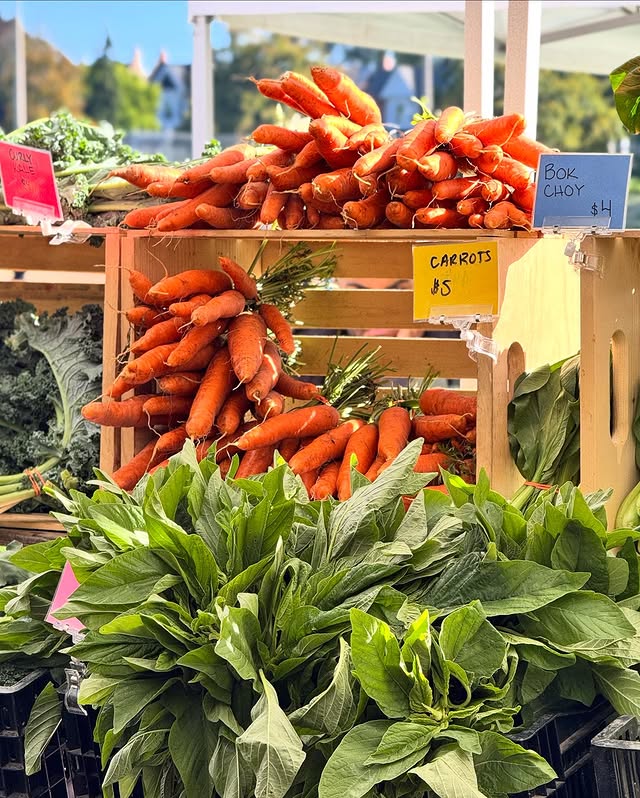
They also show up whether you plan for them or not. You might walk your dog through the park and end up buying carrots or sampling local honey. These encounters are spontaneous and just happen as part of shared space.
Markets invite participation without pressure. You can drop by or pass through. Over time, even quick stops build recognition. You start to notice who shops when, who sells what. Familiarity grows, even without deeper connection.
The Evergreen Model: Public Markets as Public Infrastructure
Some of Toronto’s most established markets don’t just operate independently, but are supported by organizations with city-building goals. At the Evergreen Brick Works, for example, the Saturday Farmers Market draws thousands of visitors annually. It hosts about 70 vendors in the warmer months, and shifts indoors with around 50 vendors during winter.

Evergreen frames its public markets as infrastructure: tools for improving food access, supporting small-scale producers, and fostering civic connection. These markets create entry points for vendors who might not otherwise afford a storefront, while also offering shoppers a deeper link to the food systems around them.
They’re also showing that markets can operate year-round in Toronto. Instead of fading with the seasons, they provide consistent infrastructure that brings residents back week after week, regardless of the weather.
Learn more about Evergreen’s public market model here.
Markets as Third Places
Sociologists describe “third places” as spaces that aren’t home or work. Toronto’s farmers’ markets fit. They offer visibility, soft structure, and the option to engage. You might keep to yourself or run into someone you know. You might arrive with a grocery list or just loop through to clear your head.
These weekly patterns matter. Reliable markets become part of how people ground themselves. You might bring your dog, swap recipe tips, or just observe what’s in season.
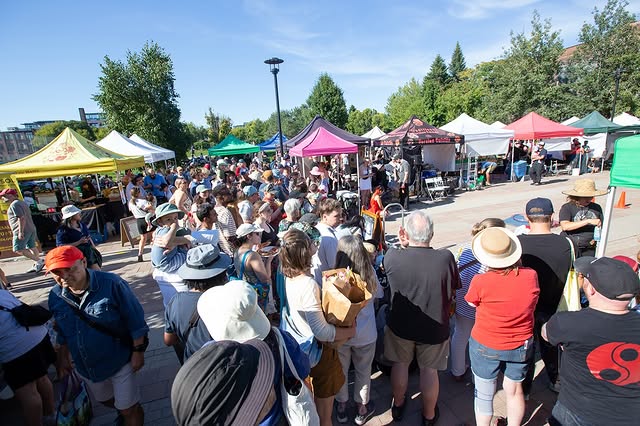
Most markets exist to improve food access, but many take on more. Kids pull wagons, seniors catch up, parents juggle coffee and produce. These moments build something informal but real: an open invitation to connect locally.
Market sizes vary. Some include only a few vendors along a shaded path. Others unfold across wide park spaces with live music and prepared food. That difference isn’t just aesthetic, it reflects how people use public life. Compact markets serve regulars with clear intent. Larger ones offer room to linger.
More Than a Shopping Trip
Markets bridge utility and community. You shop, but you also participate. This shapes how people move through the neighborhood. Markets bring foot traffic to public space and offer structure to slower parts of the day.
They also support Toronto’s small food producers like beekeepers, bakers, and urban farmers. Many of whom rotate across markets depending on the day. This informal network adds character to each location.
Markets make local food tangible. You see where the produce comes from and talk to the people who grow it. That kind of interaction makes seasonality feel concrete, not just a label but something you notice in taste, shape, and timing.
What Toronto Farmers Markets Reveal
If you want to read a neighborhood, visit its farmers’ market. Not just whether it exists, but how it feels. Is it rushed or relaxed? Packed or casual? Do people stay awhile, or grab and go?
Markets operate on a small scale, but they reveal larger patterns. They show how neighborhoods structure time, build local economies, and make space for informal public life. In a city where neighborhoods shift quickly, markets offer a point of continuity.
For anyone navigating Toronto’s dense map of possibilities, that’s worth noticing.
